Pre- and Post-Workout Nutrition on Semaglutide: What to Eat and When
TL;DR
- Pre- and post-workout nutrition on semaglutide is something you schedule, not something you wait to feel like. The drug removes the hunger that would normally prompt it, but not the body’s need for fuel.
- The working protocol: 20–30 g protein plus 20–40 g easily digested carbohydrate, 60–90 minutes before training. Small volume, high density, tolerable on a suppressed appetite.
- Post-workout, land 20–40 g of protein within about two hours, with enough leucine to trigger muscle protein synthesis.
- When a training day collides with peak injection-day nausea, drop to the floor protocol rather than skipping the session’s nutrition entirely.
Fueling training when you are never hungry
If your appetite is suppressed and eating before the gym feels pointless or impossible, here is the short answer: eat anyway, on a schedule, in a small dense form.
Aim for 20–30 g of protein and 20–40 g of easy carbohydrate about 60–90 minutes before you lift, then get 20–40 g of protein in within roughly two hours after. GLP-1 removed your hunger signal. It did not reduce the energy your body needs to train hard or the protein it needs to recover.
Training under-fueled because you were not hungry is training with one hand tied behind your back, and the training session is the mechanical signal that protects your muscle in a deficit, so a weak session is a weak signal.
Download the free GLP-1 Starter Framework: the three-lever system for losing fat without losing muscle.
Why you cannot train on appetite cues alone on GLP-1
On a normal appetite, hunger roughly tracks energy need, so “eat when you feel like it before the gym” works well enough. On GLP-1 that link is severed. The medication suppresses hunger centrally, so the absence of a pre-workout appetite tells you nothing about whether your body is fueled. You can walk into the gym genuinely not hungry and genuinely under-fueled at the same time.
The cost of ignoring this is concrete. Train fasted or under-fueled in a caloric deficit and you have less glycogen to power the session. Output drops: fewer quality reps, lighter loads, and earlier fatigue. You may also get a larger stress response from asking your body to train hard without enough fuel. None of that is catastrophic on a single day, but repeated across months it erodes training quality. Training quality is what tells your body to keep its muscle.
Eating before training on GLP-1 is a scheduled decision, the same way the rest of your eating becomes scheduled rather than hunger-driven. The broader principle is in eating by the clock on GLP-1.
Pre-workout: the protocol
The target is 20–30 g of protein plus 20–40 g of easily digested carbohydrate, taken 60–90 minutes before training. The protein supplies amino acids for the session and recovery; the carbohydrate tops off the fuel your working muscles will draw on. The timing window gives it time to digest and reach the blood without sitting heavy in your stomach during your sets.
On a suppressed appetite, format is everything. A full plate of solid food 90 minutes before lifting is a non-starter. It may not go down, and if it does, it may sit heavy. The solution is small-volume and high-density, ideally part-liquid, so it digests cleanly and does not trigger fullness or nausea under load. The carbohydrate strategy behind this is covered in carbs on semaglutide.
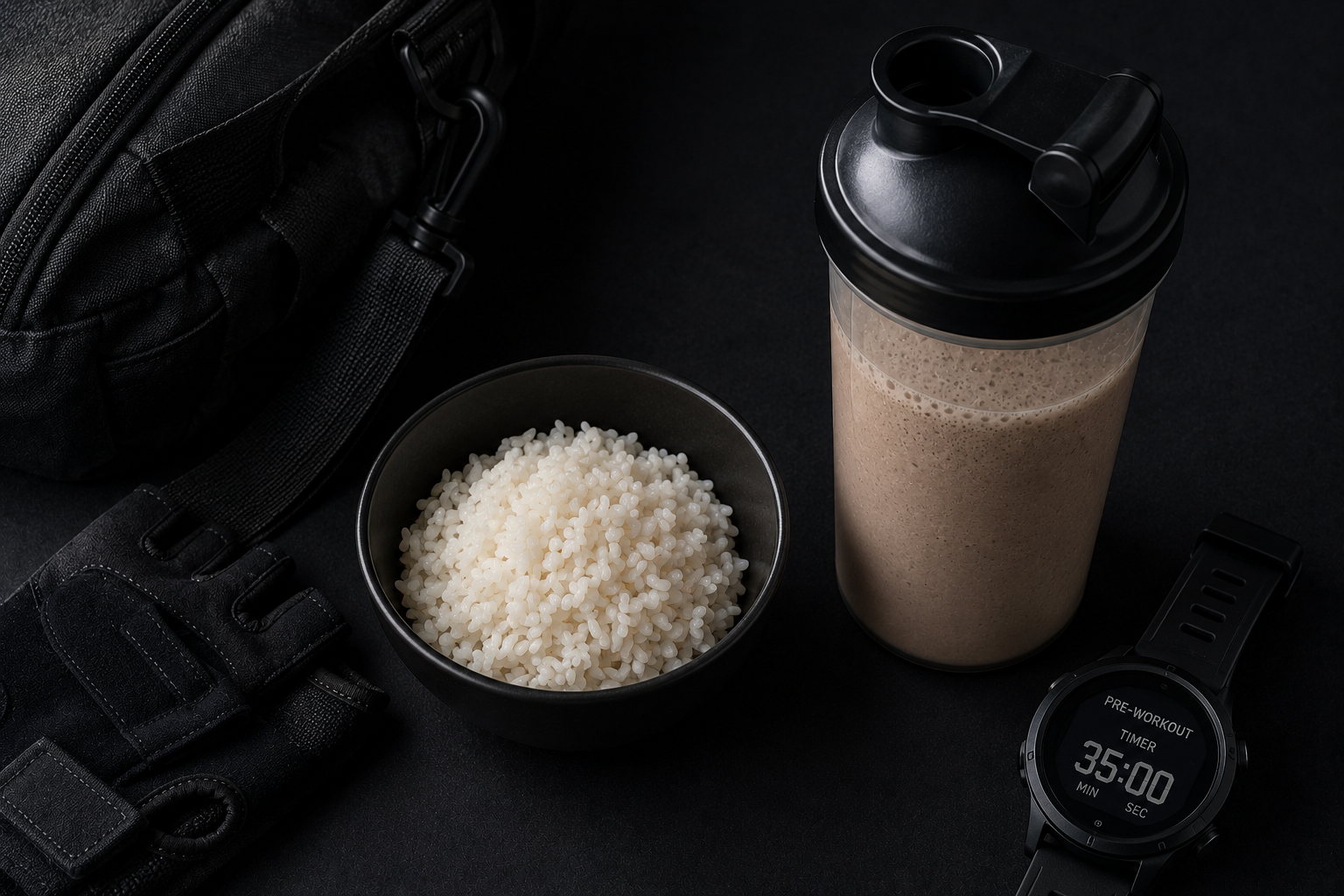
My own pre-workout settled on a protein shake mixed with cream of wheat. It put protein and easily digestible carbohydrate into my blood before lifting without the volume or heaviness that would have caused nausea mid-set. It was not a product I was sold on.
It was the format I landed on through trial because it solved the two constraints at once: enough fuel and protein, little enough volume to tolerate before a hard session. Your tolerable format may be different, but the criteria are the same: protein plus easy carbs, small volume, digested by the time you train.
What happens if you train fasted on GLP-1
Fasted training is not banned, but on this drug it carries a clearer cost than it does for someone eating at maintenance. With suppressed appetite and a standing caloric deficit, you are already low on readily available fuel.
Train on top of that with nothing in the tank and three things stack against you: depleted glycogen limits how hard you can work, the muscle-building signal from the session is blunted because amino acids are not available around the training stimulus, and a hard fasted session in a deficit can push a larger stress-hormone response.
This is a cost-benefit call, not a prohibition. A light session, or a morning session you genuinely cannot eat before, will not undo your progress. But if your goal is to train hard enough to defend your muscle in a deficit, walking in fueled is the higher-percentage choice nearly every time.
Post-workout: the protein window
After training, get 20–40 g of protein in within roughly two hours. The old “anabolic window” was once treated as a narrow, urgent slot; the current understanding is more forgiving (a couple of hours is fine) but the feeding still matters because training has primed the muscle to use protein for repair and growth.
What matters more than exact timing is that the post-workout protein clears the leucine threshold so it actually switches on muscle protein synthesis. A feeding that is too small to trigger the pathway wastes the primed state your training just created. Whey is the standard post-workout choice because it is leucine-rich and fast-digesting, producing a sharp synthesis response right when the muscle is most ready for it. The per-meal leucine mechanism is detailed in the leucine threshold.
Adjusting around injection day training sessions
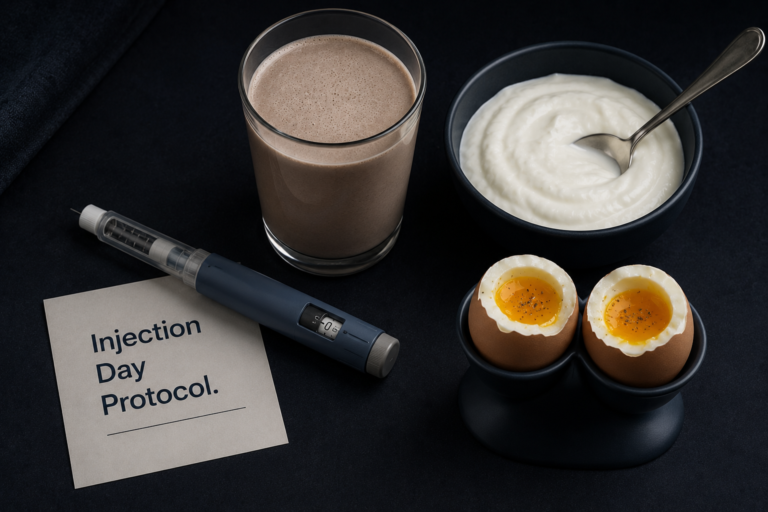
When your training day overlaps with the peak nausea window after your injection, do not force the full peri-workout protocol and do not skip nutrition entirely. Drop to the floor version: a tolerable amount of liquid protein before and after the session, carbohydrate only if it sits well. The session itself should probably be lighter on that day too. Better still, where possible, position your injection so the symptom peak does not land on your main training day at all. The injection-day eating protocol is in injection day nutrition, and the training-timing side of the same problem is its own topic in the training cluster.
A sample peri-workout day on GLP-1
A training day with an early-evening session:
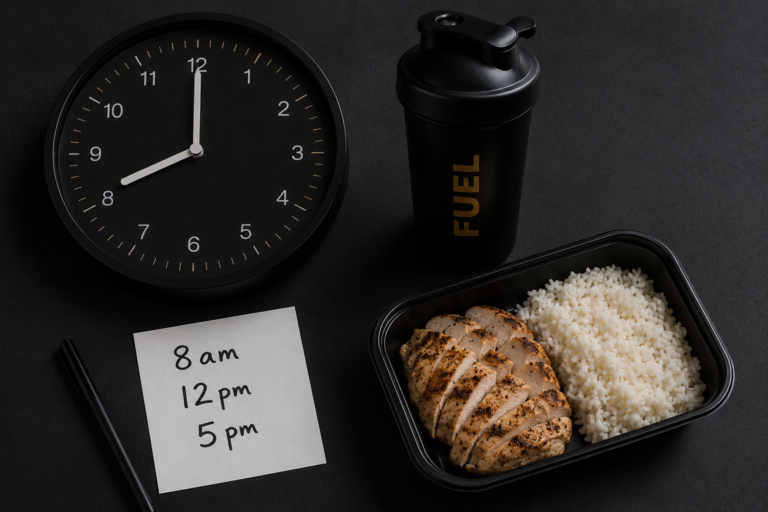
- 8am: protein-anchored breakfast: eggs + Greek yogurt (~35 g protein)
- 12pm: protein-anchored lunch: chicken or a whey shake (~35 g protein)
- 4:30pm (≈90 min pre-workout): protein shake + cream of wheat or similar: ~25 g protein, ~30 g easy carbs
- 6pm: train
- 7:30pm (post-workout): whey shake or a protein-led meal: ~30 g protein, carbs alongside
- 9pm (optional): cottage cheese or casein if the daily protein total needs topping up
Protein anchors every feeding, carbohydrate clusters around the session, and total volume stays small enough to manage on a suppressed appetite.
Key Takeaway
On GLP-1, fueling your training is a scheduled decision because the drug removed the hunger that used to prompt it, not the need behind it. Take 20–30 g of protein and 20–40 g of easy carbohydrate 60–90 minutes before lifting, in a small, dense, part-liquid form you can tolerate, then land 20–40 g of leucine-rich protein within about two hours after. Fasted training is not forbidden but carries a real cost in a deficit. On injection-day sessions, drop to the floor protocol rather than skipping. Train fueled, recover fed, and the session does its job of protecting your muscle.
Download the free GLP-1 Starter Framework: the three-lever system for losing fat without losing muscle.
The GLP-1 Training Protocol ($27) has the full PPL program with both schedule variants, progression rules, GLP-1-specific modifications, and a pre-built Training Tracker spreadsheet.
FAQ
What should I eat before working out on semaglutide?
Aim for 20–30 g of protein and 20–40 g of easily digested carbohydrate about 60–90 minutes before training. On a suppressed appetite, use a small, dense, part-liquid format (a protein shake with an easy carb source works well) so it digests cleanly without sitting heavy or triggering nausea during your sets. Schedule it; do not wait to feel hungry.
Should I work out fasted on GLP-1?
You can, but it carries a real cost in a caloric deficit: less glycogen to fuel hard training, a blunted muscle-building signal without amino acids around the session, and a larger stress-hormone response. For light sessions it is fine. If your goal is to train hard enough to preserve muscle, eating a small pre-workout feeding is the higher-percentage choice.
What should I eat after a workout on Ozempic?
Get 20–40 g of protein within roughly two hours of training, ideally from a leucine-rich source like whey so it triggers muscle protein synthesis. Add carbohydrate alongside to support recovery. The exact timing is more forgiving than the old “anabolic window” idea suggested, but the feeding still matters because training has primed your muscle to use that protein.
I’m not hungry before the gym on semaglutide: do I still need to eat?
Yes. GLP-1 removes the hunger cue but not your body’s need for training fuel. Walking in not hungry does not mean you are fueled. Use a small, tolerable pre-workout feeding on a schedule rather than relying on appetite, which the medication has switched off. A part-liquid format is easiest when nothing solid sounds appealing.
How do I handle pre-workout nutrition on injection day?
Drop to a floor protocol: a tolerable amount of liquid protein before and after the session, carbohydrate only if it sits well, and a lighter session overall. Do not force the full protocol through peak nausea, and do not skip nutrition entirely. Where possible, time your injection so the worst symptoms avoid your main training day.
Nothing on this site constitutes medical advice. I’m not a physician, and this blog documents my own research and experience. Consult a qualified healthcare provider for decisions about medication, dosing, or treatment.
Ryan Mercer | MetabolicMale.com | ryanmercer@metabolicmale.com
References
Citations:
- Jager R et al. International Society of Sports Nutrition Position Stand: protein and exercise. J Int Soc Sports Nutr. 2017;14:20.
- Norton LE, Layman DK. Leucine regulates translation initiation of protein synthesis in skeletal muscle after exercise. J Nutr. 2006;136:533S–537S.