Your GLP-1 Eating Schedule: Why You Can’t Trust Your Hunger Signals Anymore
TL;DR
- A GLP-1 eating schedule replaces hunger with the clock because the drug switches off the hunger signal that “listen to your body” advice depends on.
- Intuitive eating is not wrong as a philosophy. It is the wrong tool here, because it requires a functioning hunger cue, and semaglutide removes one pharmacologically.
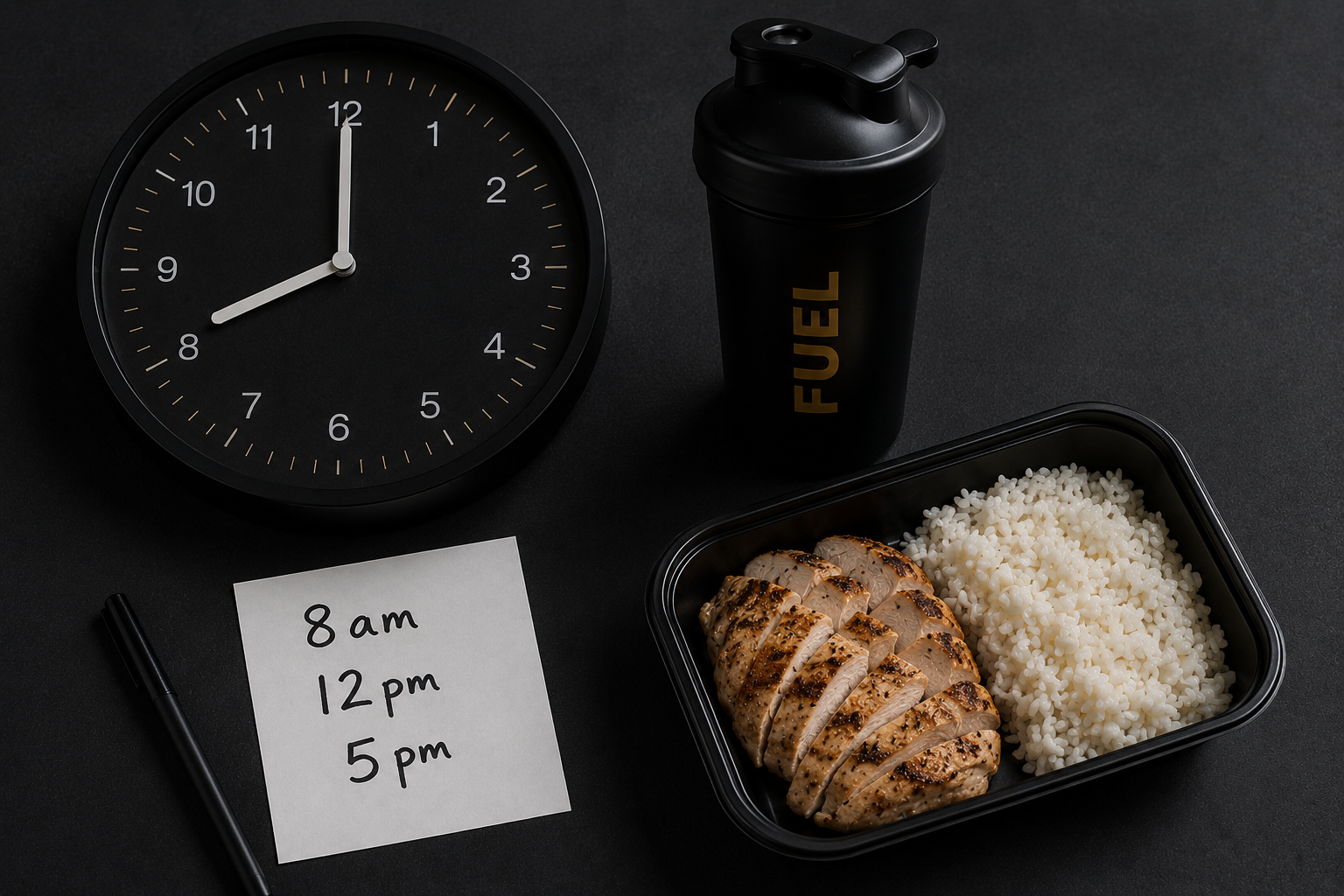
- Eat at fixed times (say 8am, 12pm, 5pm) anchored by a protein floor per meal, regardless of whether you feel hungry. The rule is time-based, not appetite-based.
- Build in a floor meal for bad days and an injection-day adjustment, and you stop accidentally under-eating yourself into muscle loss.
The advice that works for everyone else fails on this drug
“Listen to your body. Eat when you’re hungry, stop when you’re full.” It is the most common nutrition advice there is, and on GLP-1 it is actively counterproductive. The reason is mechanical: semaglutide and tirzepatide suppress appetite by acting on GLP-1 receptors in the hypothalamus, the brain region that governs hunger. When that signal is pharmacologically dialed down, the absence of hunger no longer means you have eaten enough. It means the drug is doing its job. If you wait to feel hungry before eating, you will chronically under-consume protein and calories without noticing. Until the muscle loss shows up on a DEXA scan or in the mirror.
The fix is to stop using hunger as the eating trigger and start using the clock. A GLP-1 eating schedule is simple: fixed meal times, protein anchored at each meal, and a floor you hit even when you do not feel hungry. It is the structural workaround for a body whose hunger feedback loop has been switched off.
Download the free GLP-1 Starter Framework: the three-lever system for losing fat without losing muscle.
How GLP-1 breaks the hunger-eating feedback loop
In a body not on medication, hunger and satiety form a feedback loop that roughly regulates intake. You burn energy, hunger rises, you eat, satiety rises, you stop. The loop is imperfect, but it provides a usable signal. GLP-1 medications interrupt it on purpose. By activating hypothalamic GLP-1 receptors and slowing gastric emptying, they blunt hunger and prolong fullness, which is exactly the mechanism that produces weight loss.
The catch is that the signal does not get more accurate; it gets quieter and decoupled from your actual needs. Your protein and muscle-maintenance requirements have not dropped just because the drug muted your appetite. A man who needed 160 g of protein and 1,800 calories to hold muscle still needs them. But the cue that used to push him toward food is gone, so left to “listen to his body,” he eats 900 calories and 70 g of protein and feels fine doing it. Right up until the consequences accumulate. This decoupling is the parent cause behind a lot of GLP-1 muscle loss, explored in does semaglutide cause muscle loss.
Intuitive eating on GLP-1: why it’s the wrong tool
This is not a criticism of intuitive eating as an approach. For people with intact appetite regulation, it is a reasonable framework. The argument is narrower and mechanical: intuitive eating requires a working hunger signal as its input. Remove the signal and the method has nothing to operate on. It is like steering by a compass after you have removed the magnet. The instrument is fine, but the thing it reads no longer points anywhere useful.
On GLP-1, “eat when hungry” reduces in practice to “eat rarely,” because hunger rarely arrives. That is a recipe for under-eating, and under-eating in a caloric deficit with inadequate protein is the precise condition under which the body breaks down muscle for fuel. The tool that protects most people fails the GLP-1 user for a reason specific to the pharmacology, not a failure of discipline.
Eating by the clock: the replacement system
Replace the missing hunger cue with a schedule. Pick fixed meal windows and eat at them whether or not appetite shows up. A simple structure:
- 8am: protein-anchored breakfast
- 12pm: protein-anchored lunch
- 5pm: protein-anchored dinner
- (optional) 8pm: small protein feeding if the daily total needs it
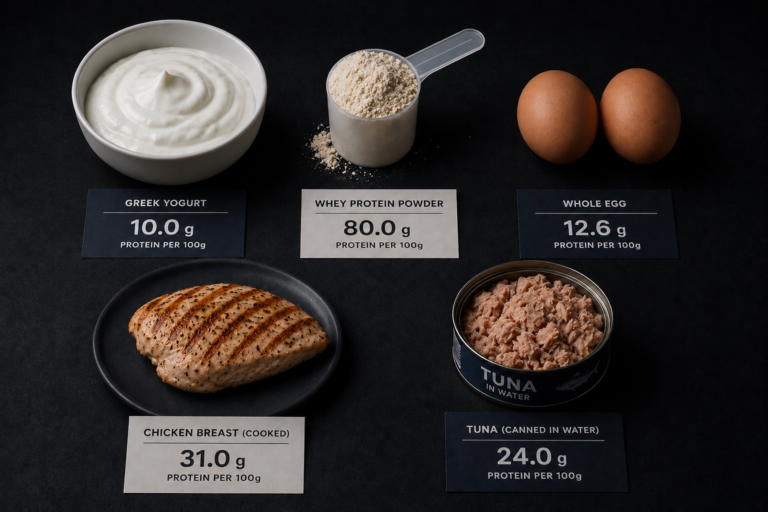
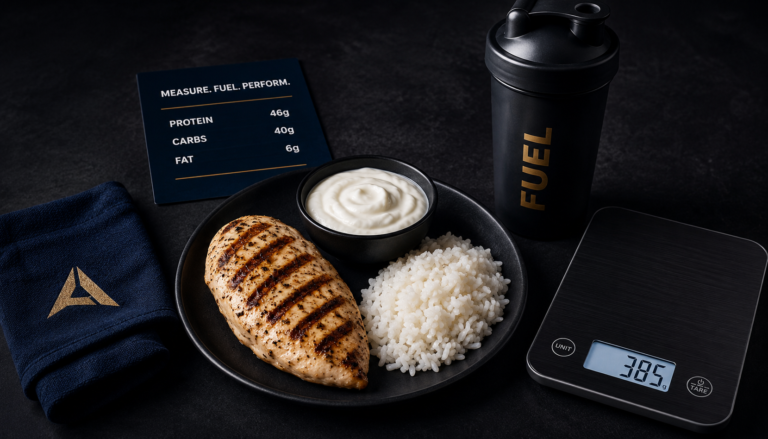
Two rules make the system work. First, the trigger is the time, not the hunger: when the clock says eat, you eat, full stop. Second, each meal is anchored by a protein floor, a minimum protein amount that meal must deliver regardless of how much else you manage. You are not aiming to feel satisfied; you are aiming to clear the protein requirement that protects your muscle. Satisfaction is no longer the metric because the gauge that measured it is offline.
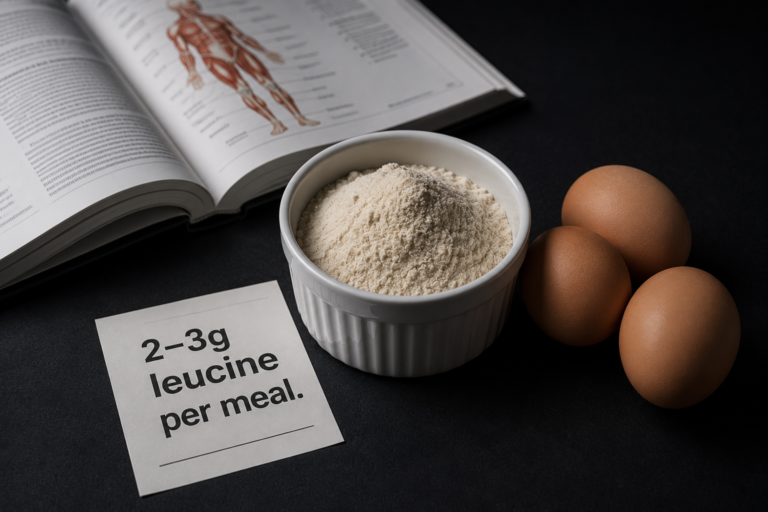
This also solves the per-meal distribution problem. Eating on a fixed schedule naturally spaces protein across the day so each meal can clear the muscle protein synthesis threshold, instead of collapsing into one late load. The mechanism is explained in the leucine threshold.
How to set up your schedule around your injection day
Your schedule needs one standing exception: injection day and the nausea window that follows it. Symptoms typically peak in the 12–72 hours after a dose, and during that stretch even a clock-based meal can be hard to get down. The answer is not to abandon the schedule. It is to modify it. Keep the meal times, but on the worst-tolerance days shift to the floor version of each meal: smaller, liquid or soft, protein-anchored. The structure holds even when the volume shrinks. The dedicated protocol is in injection day nutrition.
What happens when you skip a scheduled meal
Skipping is not neutral. Two things happen. First, the protein math: a missed meal is a missed 30–40 g of protein that you will struggle to recover later in the day on a suppressed appetite, so the daily total quietly falls short. Second, the synthesis gap: that meal was a window to flip the muscle-retention switch via a leucine dose, and skipping it leaves the window empty. The body gets one fewer signal to hold its muscle that day. Miss a meal here and there and the cost is small. Make skipping a habit, which is exactly what intuitive eating on GLP-1 encourages, and the cumulative shortfall is how a successful weight-loss number hides an unsuccessful body-composition result.
When I started tracking not just what I ate but when, the data was uncomfortable. On injection days I was routinely going six-plus hours between anything that counted as a meal, not by choice, just because nothing prompted me to eat and the day slipped by. Seeing the time gaps written down was what convinced me the clock had to run the schedule, because my appetite clearly was not going to. The fix was mechanical: alarms at the meal windows, and a non-negotiable floor I hit at each one even when the gap had stretched and I felt nothing.
The floor rule: eat this even if you cannot eat more
For the days when even the schedule is a fight, define a floor meal in advance: the minimum you will eat at each window no matter what. Mine was protein-forward and tiny: a protein shake plus a tablespoon of peanut butter, or a half cup of Greek yogurt. The point of the floor is that it removes the decision. On a bad day, I did not negotiate with myself about whether I could manage a meal. I executed the pre-defined floor and moved on. Liquid protein is the backbone of most floor meals because it bypasses the fullness that blocks solid food, a strategy covered in the protein shake strategy for GLP-1 users.
A floor rule also fits how a sustainable plan should work in general: a target for good days, a floor for bad ones, and a clear way back when you slip. Perfection is not the standard. Hitting the floor on a hard day is a win, not a failure, because it keeps the system intact until the good days return.
Key Takeaway
GLP-1 switches off the hunger signal that “eat when you’re hungry” depends on, which turns intuitive eating into a mechanism for under-eating. Replace the missing cue with a clock: fixed meal times, each anchored by a protein floor, eaten whether or not appetite shows up. Modify the schedule on injection days rather than abandoning it, and define a floor meal you hit on bad days so the system survives them. The clock does the job your hunger used to do, and on this drug, that is the only job your hunger has stopped doing.
Download the free GLP-1 Starter Framework: the three-lever system for losing fat without losing muscle.
The GLP-1 Nutrition Planning Framework ($17) covers protein targets, deficit management on suppressed appetite, injection day adjustments, and a 12-week tracking spreadsheet for logging it all.
FAQ
Should I eat if I’m not hungry on semaglutide?
Yes. On GLP-1, absence of hunger means the drug is suppressing your appetite, not that you have eaten enough. Your protein and calorie needs for preserving muscle have not dropped. Eat on a fixed schedule (set meal times you hit whether or not appetite shows up) rather than waiting for a hunger cue that the medication has pharmacologically muted.
Why doesn’t intuitive eating work on GLP-1?
Intuitive eating requires a functioning hunger signal as its input, and GLP-1 medications suppress that signal at the hypothalamic level. Without a reliable hunger cue, “eat when hungry” becomes “eat rarely,” leading to chronic under-eating of protein and calories. The method is sound for people with intact appetite regulation; it simply has nothing to operate on once the drug removes the signal.
How many meals a day should I eat on GLP-1?
Three protein-anchored meals at fixed times is the baseline, with an optional fourth small protein feeding if you are short on your daily total. Fixed timing spaces your protein so each meal can clear the muscle protein synthesis threshold, and it prevents the common pattern of skipping meals and loading everything into one evening sitting.
What should I do on injection day if I can’t eat my scheduled meals?
Keep the meal times but shrink each one to its floor version: small, liquid or soft, protein-anchored. Do not skip meals entirely. A protein shake or Greek yogurt at each scheduled window protects your protein floor even when nausea makes a full meal impossible. The goal on a hard day is hitting the minimum, not the ideal.
Is it bad to eat on a schedule instead of when hungry?
Not on GLP-1. For most people, hunger-based eating is fine, but the medication removes the hunger signal that makes it work. Schedule-based eating is the deliberate workaround. It ensures consistent protein intake and meal spacing when your body’s natural appetite cues are offline. Once you are off the medication and appetite returns, you can relax the structure.
Nothing on this site constitutes medical advice. I’m not a physician, and this blog documents my own research and experience. Consult a qualified healthcare provider for decisions about medication, dosing, or treatment.
Ryan Mercer | MetabolicMale.com | ryanmercer@metabolicmale.com
Citations:
- Norton LE, Layman DK. Leucine regulates translation initiation of protein synthesis in skeletal muscle after exercise. J Nutr. 2006;136:533S–537S.
- Jager R et al. International Society of Sports Nutrition Position Stand: protein and exercise. J Int Soc Sports Nutr. 2017;14:20.
- Ozempic (semaglutide) Prescribing Information. Novo Nordisk. Current label.