Does Semaglutide Target Belly Fat Specifically? What the Emerging Research Shows
TL;DR
- Semaglutide and visceral fat: GLP-1 drugs appear to reduce visceral fat, and the evidence is consistent across imaging substudies, but the effect is directional, the mechanism is not fully characterized, and the overall caloric deficit is still doing most of the work.
- Visceral fat (around the organs, behind the abdominal wall) is metabolically distinct from subcutaneous fat, and the distinction matters for both your health markers and how your body responds to a deficit.
- In practice, people often see waist circumference move before the scale reflects meaningful change, which lines up with what the imaging data suggests.
- “Belly fat targeting” is a real finding, not a precision effect. The drug does not aim at your gut; it may shift the proportion of visceral versus subcutaneous fat you lose.
The honest answer to “does semaglutide target belly fat” is: directionally yes, with caveats that most articles skip. GLP-1 medications appear to reduce visceral fat (the metabolically dangerous fat packed around your organs), and that finding shows up consistently in imaging studies. But “appears to” is doing real work in that sentence. The evidence is supportive and pointing the same direction across trials, the mechanism is plausible but not nailed down, and the engine underneath all of it is still the overall caloric deficit. The drug is not a targeting system. What it may do is change the mix of fat you lose, and that is worth understanding precisely rather than overselling.
Download the free GLP-1 Starter Framework, the three-lever system for losing fat without losing muscle.
Visceral Fat vs. Subcutaneous Fat: Why the Distinction Matters
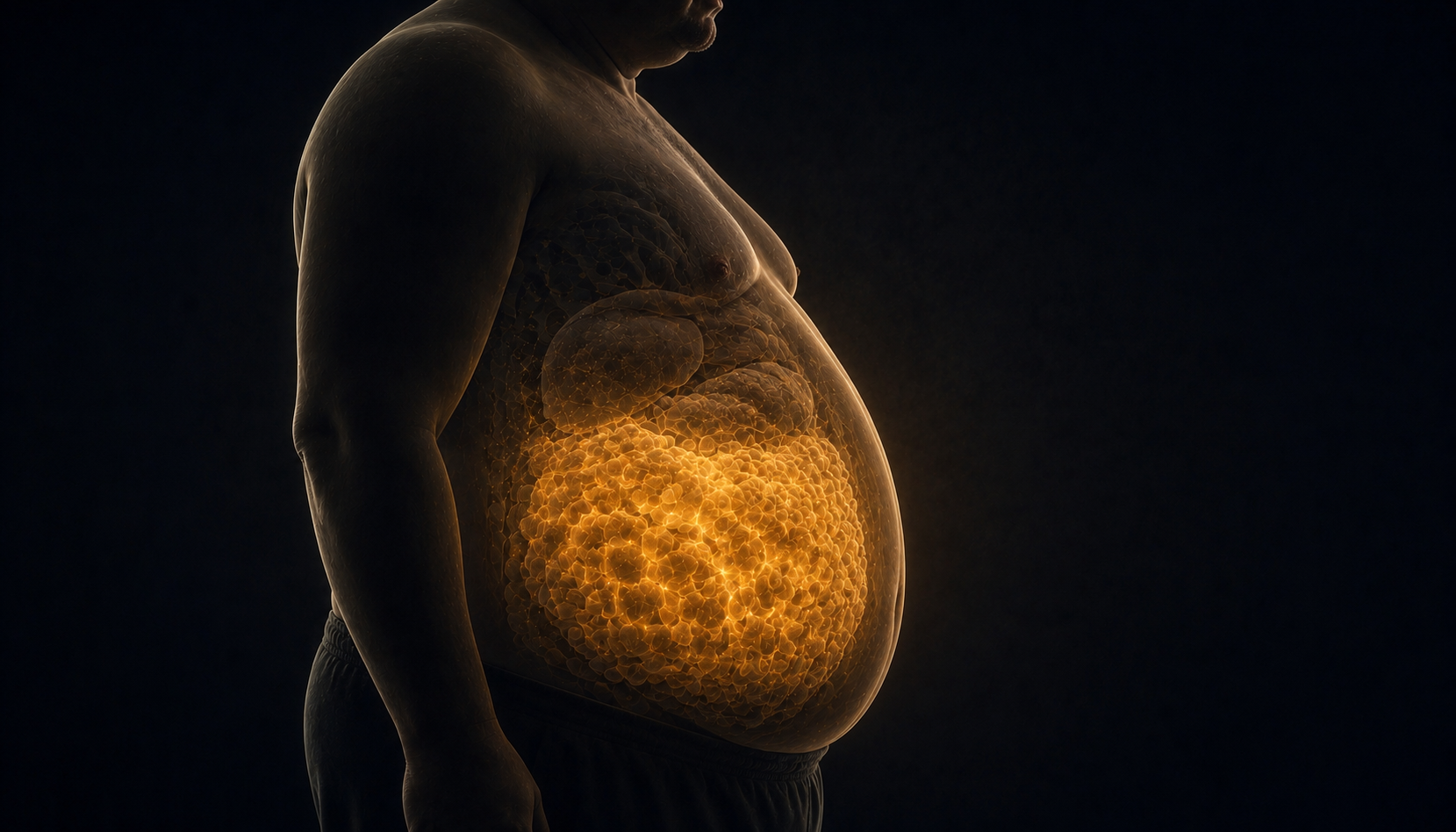
“Belly fat” is two different things, and people conflate them constantly. Subcutaneous fat sits under the skin: it is the fat you can pinch, including over the abdomen. Visceral fat sits deeper, behind the abdominal muscle wall, wrapped around the liver, intestines, and other organs.
The difference is not cosmetic. Visceral fat is metabolically active in ways subcutaneous fat is not. It has higher lipolytic activity, drains directly into the portal vein feeding the liver, and is the depot most strongly tied to insulin resistance, cardiovascular risk, and the cluster of problems that make excess weight genuinely dangerous rather than merely inconvenient. Two men at the same body weight and the same waist size can carry very different visceral loads, and the one carrying more visceral fat is in the worse metabolic position. That is why visceral fat is the higher-value target, even though it is the one you cannot see directly.
What the Imaging Substudies Show
This is where the evidence is genuinely interesting, and where the hedging earns its place.
The clearest direct imaging data comes from tirzepatide. In the SURPASS-3 MRI substudy, tirzepatide produced significant reductions in visceral adipose tissue, abdominal subcutaneous fat, and liver fat compared with insulin degludec (Gastaldelli et al., Lancet Diabetes Endocrinol, 2022;10:393-406). A SURMOUNT-1 body composition substudy similarly reported significant reductions in waist circumference and visceral fat mass versus placebo, though there the visceral fat was estimated from the android region rather than measured directly (Diabetes, Obesity and Metabolism, 2025).
For GLP-1 mono-agonists specifically, the picture is consistent in direction. Liraglutide reduced visceral and ectopic fat in adults with overweight and obesity at high cardiovascular risk (Neeland et al., Lancet Diabetes Endocrinol, 2021;9:595-605), and semaglutide has its strongest direct evidence in ectopic fat: it reduces liver steatosis in non-alcoholic fatty liver disease (Flint et al., Aliment Pharmacol Ther, 2021). Semaglutide-specific visceral imaging data is thinner than tirzepatide’s, which is the honest limitation: the class effect on visceral and ectopic fat is well-supported in direction, but the cleanest direct visceral imaging sits with the other drugs in the family.
Emerging agents are tracking this too. Retatrutide, a triple agonist that remains investigational as of this review, reported 28.3% mean weight loss at 80 weeks in the Phase 3 TRIUMPH-1 topline results. That is context for where the class is heading, not a visceral-fat-specific result and not an option you can act on until approval status changes. Treat retatrutide as a signal, not a protocol decision.
Why Visceral Fat May Respond Differently to a Deficit
There is a plausible reason visceral fat would come off readily, and it predates GLP-1 drugs. Visceral adipocytes have higher lipolytic activity and a greater density of beta-adrenergic receptors than subcutaneous fat, and their direct portal access makes them metabolically “busier.” Fat that is more metabolically active tends to mobilize first under a caloric deficit. On top of that, GLP-1 receptor expression in adipose tissue may add a direct effect, but the evidence there is directional, and the clinical significance in humans appears secondary to the deficit itself.
So the most defensible reading is layered: a caloric deficit may preferentially mobilize visceral fat for reasons that have nothing to do with the drug, and GLP-1 medications may augment that effect. What we still cannot say cleanly is how much of the visceral reduction is drug-specific versus deficit-driven. The rate at which you lose weight is itself a variable that influences which fat depots mobilize, which is another reason the deficit, not the drug’s “aim,” is the lever you actually control.
What the Experience Looks Like on GLP-1
In practice, the visceral-first pattern often shows up as the tape measure moving before the scale does. Waist circumference is one of the more reliable early-stage tracking metrics for exactly this reason: visceral fat sits at the waist, it mobilizes early, and a shrinking waist can register real progress that a stalled scale hides.
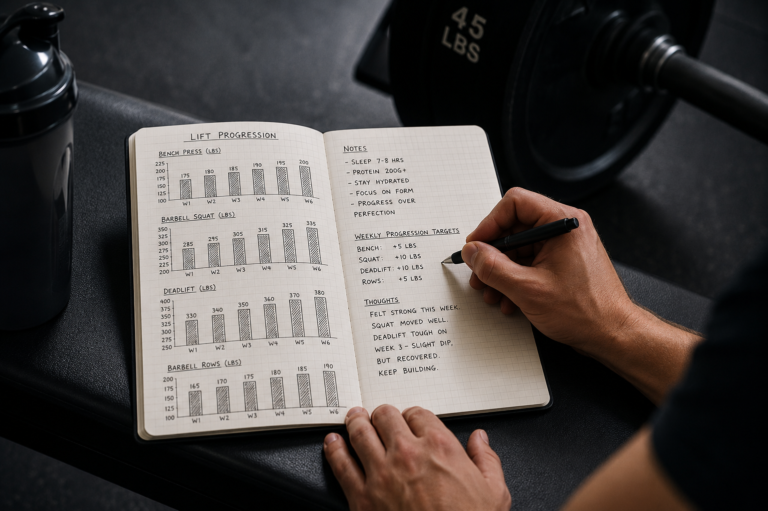
In my first month, my waist circumference dropped measurably across weeks 2 to 4 while the scale looked like it had stalled. I tracked both weekly, which is the only reason I caught it: if I had been watching the scale alone, I would have thought nothing was happening. I am offering that as a personal observation, not a number you should expect to replicate; the point is the pattern of tracking two metrics, not my specific inches.
What This Doesn’t Do
Here is the expectation to set, because getting it wrong leads to frustration. Visceral fat loss does not mean subcutaneous fat follows at the same pace, and subcutaneous fat is the fat that determines how you look at lower body fat percentages. You can be improving your metabolic health and cardiovascular risk substantially while the mirror lags behind, because the depot driving the health numbers is not the depot driving the visible abs.
That lag is normal and worth planning around emotionally: the metabolic wins arrive before the aesthetic ones. It is also why the scale is the wrong primary metric for tracking what actually matters on GLP-1, and why waist measurements, photos, and how your bloodwork moves tell you more than a single number ever will. For the full mechanistic picture, including how GLP-1 acts on adipose tissue, see the complete GLP-1 mechanism breakdown.
Download the free GLP-1 Starter Framework, the three-lever system for losing fat without losing muscle.
The GLP-1 & Body Composition guide ($7) covers the trial-by-trial body-composition data, including what the DXA and imaging substudies actually measured.
FAQ
How long does it take to see visceral fat reduction on semaglutide?
Visceral fat tends to mobilize early in a caloric deficit, and many people notice waist circumference shrinking within the first several weeks: sometimes before the scale moves much. Measurable change on imaging accrues over the months of treatment as total weight loss builds. There is no fixed timeline, and individual response varies. Tracking waist circumference weekly is a practical way to catch visceral progress that the scale can mask.
Is tirzepatide better than semaglutide specifically for reducing belly fat?
Tirzepatide produces greater average total weight loss in trials, and the most direct visceral fat imaging data (SURPASS-3 MRI substudy) is in tirzepatide. More total fat loss generally means more visceral fat loss. Whether tirzepatide is preferentially better for visceral fat beyond its larger overall effect is not established. The practical read: the more effective drug tends to move more of every fat depot, visceral included, but treat “better for belly fat specifically” as unproven.
Can I measure visceral fat loss without a DEXA scan?
Yes, imperfectly. Waist circumference is the most accessible proxy: measured consistently at the same spot, it tracks visceral change reasonably well over time. Waist-to-height ratio adds context. DEXA and MRI are more precise but require access and cost. For most people, a tape measure used the same way each week, alongside progress photos, captures the trend that matters without a clinic visit.
Why is my waist circumference shrinking faster than the scale is moving on GLP-1?
This is a common and expected pattern. Visceral fat is metabolically active and mobilizes early in a deficit, so the waist can shrink while overall scale weight lags, especially if you are also retaining water or holding lean mass. It is one reason the scale is a poor sole metric on GLP-1. A shrinking waist with a stalled scale usually means fat loss is happening where it counts most for health.
Does visceral fat return when you stop GLP-1?
Weight regain after stopping GLP-1 is well-documented, and regained weight can include visceral fat: particularly if the eating and activity patterns that drove the original accumulation return. The protective factor is what you build during treatment: sustained habits, resistance training, and an eating structure that holds without the drug. Visceral fat is responsive in both directions, which is an argument for treating the medication as part of a durable system rather than a temporary course.
Nothing on this site constitutes medical advice. I’m not a physician, and this blog documents my own research and experience. Consult a qualified healthcare provider for decisions about medication, dosing, or treatment.
Ryan Mercer | MetabolicMale.com | ryanmercer@metabolicmale.com
References
- Gastaldelli et al. Lancet Diabetes Endocrinol, 2022;10:393-406.
- Neeland IJ et al. Lancet Diabetes Endocrinol, 2021;9:595-605.
- Flint A et al. Aliment Pharmacol Ther, 2021.
- Jastreboff AM et al. NEJM, 2023;389:514-526.
- Jastreboff et al. NEJM, 2022;387:205-216.
- Eli Lilly and Company. TRIUMPH-1 topline results for retatrutide, May 2026