Ozempic Nausea: What to Eat and How to Protect Your Protein
TL;DR
- Ozempic nausea is a mechanism response, not a warning sign. It follows a predictable timeline you can plan around.
- The real danger isn’t the discomfort. It’s what eating almost nothing does to your protein intake and your lean mass.
- The protocol below is ordered by impact: injection timing first, then how you eat, then what you eat.
- On my worst dose escalation I lived on ginger tea, Greek yogurt, and one protein shake. I still landed 45 g of protein that day. Holding a floor is the whole game.
Ozempic nausea is real. It’s also manageable. And the way most people respond to it, eating almost nothing until it passes, is exactly the behavior that accelerates lean mass loss. This is the protocol I built for myself, grounded in what the pharmacology actually explains.
If you just injected and feel terrible, the first step is to understand the pattern. In many users, nausea is a predictable mechanism response that clusters around the post-injection window and dose increases. That does not make severe symptoms something to ignore, but it does mean the common version can be planned around.
Download the free GLP-1 Starter Framework, the three-lever system for losing fat without losing muscle.
Why GLP-1 Medications Cause Nausea and When to Expect It
GLP-1 medications, including semaglutide (Ozempic, Wegovy) and tirzepatide (Mounjaro, Zepbound), slow gastric emptying, so food leaves your stomach more slowly than normal. They also activate vagal nerve pathways that signal the brainstem directly. Both mechanisms drive nausea, particularly in the early weeks and at each dose increase.
The nausea isn’t random. It tracks drug concentration: for subcutaneous semaglutide, peak concentration (Tmax) lands roughly 24–72 hours after injection, and nausea is typically worst in that window, often easing by day three. The pattern repeats at each escalation: a spike for a few days, then adaptation over two to four weeks. It tends to get milder each time. Nausea isn’t a single event you wait out once. It’s a series of smaller waves tied to your titration schedule, which means you can plan around it instead of just surviving it.
The Ozempic Nausea Protocol
Ordered by impact, not effort. Start at the top.
1. Adjust Your Injection Timing
If you inject in the morning and spend your worst hours trying to function at work, shift to an evening injection. You sleep through a chunk of the 24–48 hour peak window. I inject on a consistent day, treat that day as a rest day from the gym, and train the day before when I can. Some prescribers have timing preferences, so check before changing. Day and time are usually flexible, and this is the lowest-effort, highest-impact lever available.
2. Modify Your Morning and Late Evening Eating
Heavy, high-fat, high-volume meals are the worst thing to eat when gastric emptying is already slowed. Your stomach is working through food more slowly than usual; a large dense meal amplifies nausea. On injection days and the day after, keep early morning and evening meals light. A smaller, lower-fat breakfast like Greek yogurt or a soft egg beats eggs and bacon at volume. Same at night: a full stomach plus slowed motility plus lying down is a reliable path to a miserable night.
3. Ginger Tea
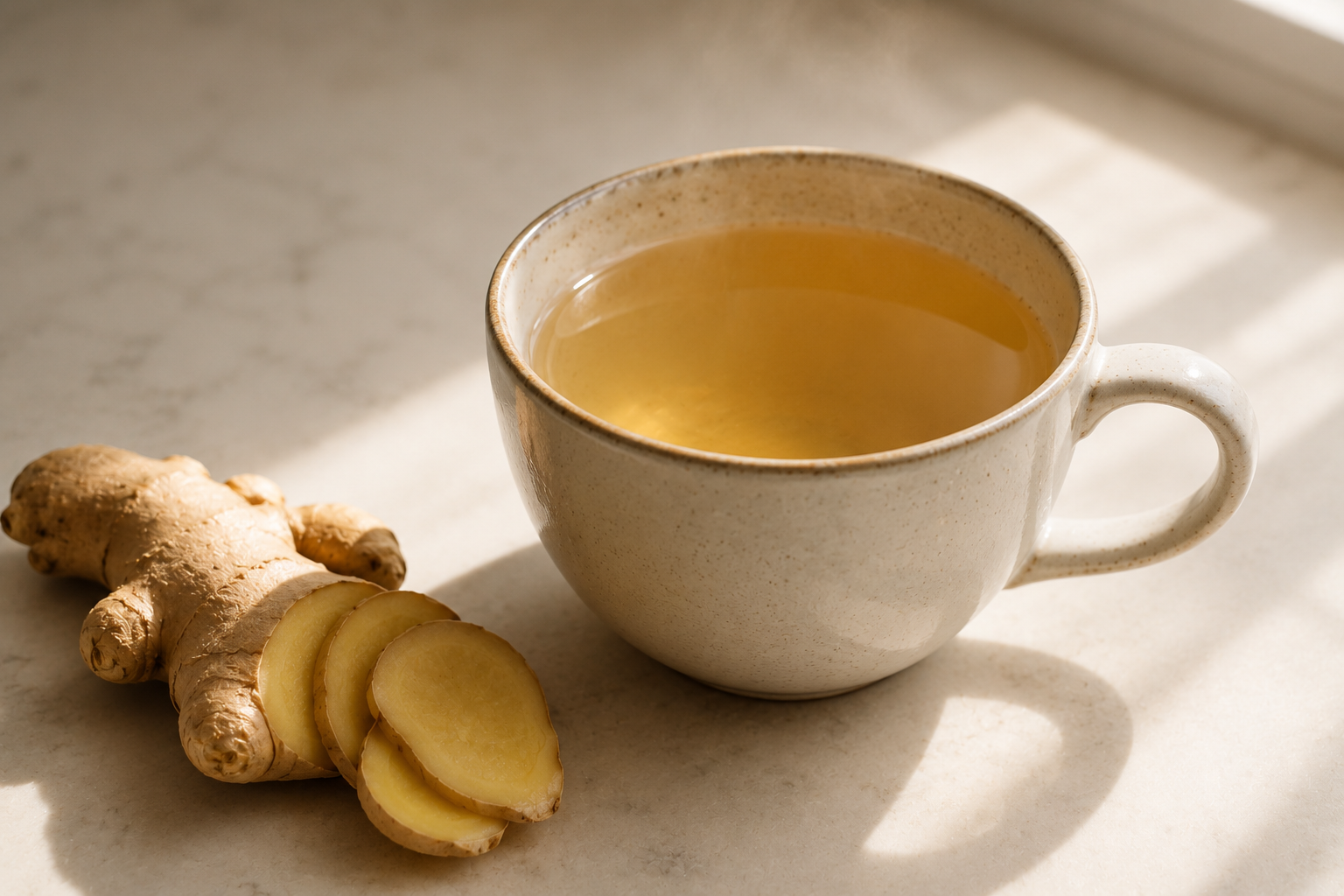
Less pharmacology, more genuine tolerability. Ginger has a reasonable evidence base for nausea: it’s used for pregnancy-related and chemotherapy-induced nausea, and GLP-1 nausea responds similarly. Warm ginger tea, sipped slowly, reliably takes the edge off on bad injection days. Use actual ginger. Steep fresh root or a quality tea, not a ginger-flavored product, and have it ready before nausea peaks.
4. Slow Down Your Coffee
Coffee on a compromised stomach is a bad combination. The acidity and GI stimulation you tolerate fine normally turns irritating when motility is disrupted. Slow the pace rather than cutting it: drink it over 45–60 minutes instead of 10. Cold brew, lower in acidity, tends to sit better. Cut the second cup on injection day if you’re symptomatic.
5. Eat More Frequently, in Smaller Amounts
If you’re struggling to eat at all, the goal shifts from full targets to a nutritional floor. Four or five small eating windows distribute the gastric load better than two or three full meals. This applies to fiber too: high-fiber foods add bulk to contents that are already moving slowly, so deprioritize high-fiber vegetables and whole grains on peak nausea days. Reintroduce them once the acute phase passes.
6. Prioritize Liquid Protein on the Worst Days
When solid food is genuinely unappealing, and there will be days like that, liquid protein is your best option. Whey shakes, clear broth with a protein supplement, or thinned Greek yogurt move through faster than solids and don’t create the gastric distension that worsens nausea. Reach for whey isolate over concentrate here: it’s lower in lactose and fat, digests faster, and sits better on a compromised stomach.
On a bad day, your goal isn’t your full target. It’s a floor. Mine on the worst days is 80–100 g: calibrated to bodyweight and the minimum to meaningfully limit muscle protein breakdown without forcing my stomach to do work it can’t. Don’t aim for zero. Zero has real consequences for lean mass. Does Ozempic Cause Muscle Loss? → explains the mechanism and what you’re actually managing against.
What to Eat on Ozempic When You’re Nauseous: Soft Foods Ranked by Protein Density
On nausea days, the goal is soft, low-fat, high-protein foods in small amounts. The best options, ranked by protein per unit of volume: Greek yogurt, cottage cheese, a protein shake, soft scrambled eggs, steamed white fish, and silken tofu. Here is the full breakdown:
- Greek yogurt (plain, 2%): ~20 g per cup, soft, cold, easy on the stomach
- Cottage cheese: ~28 g per cup, no chewing load, high protein density
- Protein shake: 20–30 g per serving, zero gastric load if liquid
- Scrambled eggs (soft): ~18 g for 3 eggs, light texture
- White fish (cod, tilapia, steamed): ~25 g per serving, very low fat, easy to digest
- Silken tofu: ~10 g per half block, soft texture, minimal gastric stress
Stay away from high-fat, high-fiber, or heavily seasoned foods on nausea days.
Keep Moving, Even on the Hard Days
Light activity helps with both nausea and overall progress, and it doesn’t require feeling great. I targeted a 45-minute walk and 8,000 steps a day throughout. The catch is the climate: in Florida you’re either fighting a brutal sun at midday or humid, sticky air full of mosquitos in the morning and evening. You pick your battle and go anyway. I shifted walks to early morning or late evening and accepted the bugs.
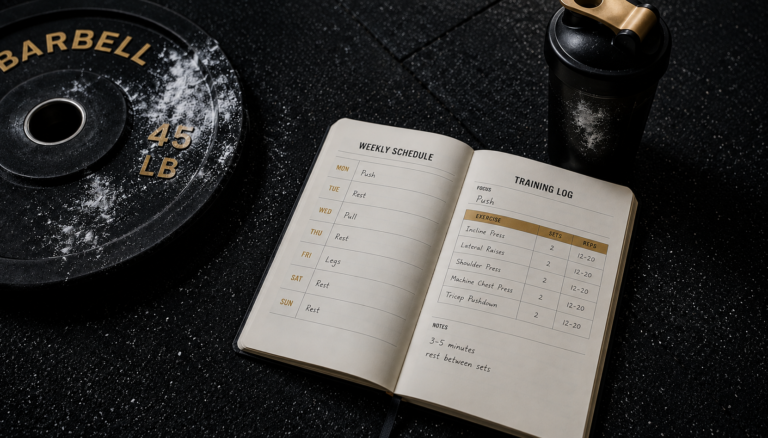
Training is the same principle on a smaller scale. For the first several months I couldn’t train legs normally. I was rehabbing a hip issue and built leg days around stability and glute activation before earning my way back to a real hypertrophy day. The lesson generalizes to nausea weeks: a reduced session still counts. When a full workout isn’t happening, a minimum effective dose protects far more lean mass than skipping entirely. Once I dropped to around 18–19% body fat I layered in slow jogs, though I still prefer the walk.
When to Actually Call Your Prescriber
Uncomfortable nausea is expected and manageable. Nausea that crosses into the following territory needs medical attention:
- You’re vomiting repeatedly and can’t keep liquids down
- Nausea is severe and persists beyond 72 hours after injection with no relief
- You’re showing signs of dehydration (dark urine, dizziness, significant fatigue)
- Nausea comes with severe abdominal pain: especially upper abdominal pain radiating to the back, which can indicate pancreatitis and requires immediate evaluation
My Actual Experience
My worst nausea was the first dose escalation. I’d been fine at the starting dose and got overconfident. The jump hit harder than expected: two days of real discomfort and one day where I survived on ginger tea, Greek yogurt, and protein shakes. The yogurt gave me 20 g with almost no gastric load. A scoop of whey in water added 25 g. That’s 45 g on a day I wasn’t going near solid food. Not ideal, but not the zero that costs you lean mass. It normalized within a week.
To build the full picture of what protein targets look like and why they matter on a GLP-1: How Much Protein on Ozempic, Wegovy, or Mounjaro →
For the complete framework including training, tracking, and side effect management: grab the free Starter Framework here →
FAQ
How long does nausea last on Ozempic?
For most people, nausea is worst in the first few weeks and in the 24–72 hours after each dose increase, then eases over two to four weeks as the body adapts. It tends to get milder at each successive dose. Persistent, severe nausea beyond 72 hours post-injection, or any inability to keep liquids down, warrants a call to your prescriber.
What can I eat on Wegovy when nauseous?
Soft, low-fat, high-protein foods in small amounts: Greek yogurt, cottage cheese, protein shakes, soft scrambled eggs, steamed white fish, and silken tofu. Liquid protein is the most reliable when solid food is impossible. Avoid high-fat, high-fiber, and heavily seasoned foods, which sit heavily on a slowed stomach and tend to make nausea worse.
How do I get enough protein when I can’t eat on a GLP-1?
Hold a floor instead of chasing your full target. Liquid protein is the workhorse: a whey isolate shake delivers 25–35 g with minimal gastric load. Thinned Greek yogurt, cottage cheese, and clear broth with a protein supplement also work. Spread small amounts across the day rather than forcing a meal. Something always beats nothing for protecting muscle.
Should I skip my workout when nauseous on Ozempic?
Not entirely. A reduced session protects more lean mass than skipping outright. Train the day before your injection if timing allows, treat peak nausea days as rest or light activity, and drop to a minimum effective dose rather than zero on bad weeks. Even a short, lighter session keeps the muscle-preserving signal alive.
What foods make GLP-1 nausea worse?
High-fat meals are the biggest offender: fat further slows gastric emptying. Large portions, fried foods, very rich or greasy dishes, heavy late-night meals, and on some days high-fiber foods and acidic drinks like coffee all tend to amplify nausea. Lighter, lower-fat, smaller meals are far better tolerated while motility is disrupted.
To build the full picture of what protein targets look like and why they matter on a GLP-1: How Much Protein on Ozempic, Wegovy, or Mounjaro →
Nothing on this site constitutes medical advice. I’m not a physician, and this blog documents my own research and experience. Consult a qualified healthcare provider for decisions about medication, dosing, or treatment. If you experience severe or persistent side effects, contact your prescribing provider.
– Ryan Mercer | MetabolicMale.com | ryanmercer@metabolicmale.com
References
- Wilding JPH, Batterham RL, Calanna S, et al. Once-weekly semaglutide in adults with overweight or obesity. New England Journal of Medicine. 2021;384:989-1002.
- Novo Nordisk. Wegovy prescribing information. Current FDA label.
- Holst JJ. The physiology of glucagon-like peptide 1. Physiological Reviews. 2007;87:1409-1439.
- Lete I, Allue J. The effectiveness of ginger in the prevention of nausea and vomiting during pregnancy and chemotherapy. Integrative Medicine Insights. 2016;11:11-17.